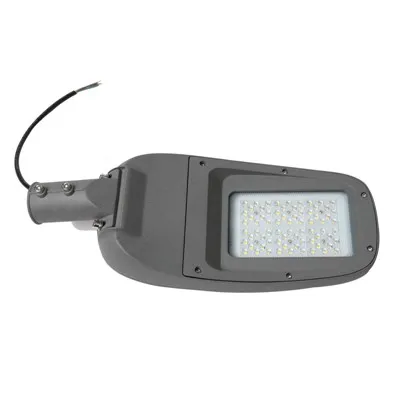

The Best Led Street Light Manufacturer!
Yangzhou Goldsun Solar Energy Co., Ltd. was established in 2009. Our company has been engaged in LED street light manufacturing industry for more than 10 years. Our products include solar LED street light, municipal high-power LED street light and low-power LED street light used in rural roads. The whole set of LED street light includes LED light head, light pole, constant power source, embedded parts, etc., which we can all provide. Because of the price of raw materials and the perfect industrial chain, our street light product is not only cheap but also of good quality with low failure rate.
Why Choose Us
Rich Production Experience
Our company has been engaged in LED street light manufacturing industry for more than 10 years.
Strict Quality Control
Because of the price of raw materials and the perfect industrial chain, our street light product is not only cheap but also of good quality with low failure rate.Most clients have build long-term cooperation with our company.
Diversified Product Categories
Our products include solar LED street light, municipal high-power LED street light and low-power LED street light used in rural roads. The whole set of LED street light includes LED light head, light pole, constant power source, embedded parts, etc., which we can all provide.
Reasonable Product Price
In particular, the integrated Solar Street Light and High Mast Street Light have been warmly welcomed in Africa, Southeast Asia, the Middle East and some European countries because of the low failure rate, low cost, perfect installation and after-sales service of our products.

The LED street light has a unique secondary optical design, which illuminates the LED street lamp to the required illumination area, and further improves the illumination efficiency.

LED Power: 30W/50W/80W/100W/120W/150W/200W/250W/300W
Pole Height: 5M~13M
IP Rating: IP65

The light source of our Cobra Head Street Lights is equipped with an induction lamp, and the light distribution is performed by a reflective cover.

The 20 Watt LED Street Light realizes the function to ensure that the lifespan of solar lamps is much higher than that of ordinary product on the market.

Municipal street lights driven by high efficiency constant current and 60% energy-saving than traditional lamps.

The color temperature of LED Street light is expressed by K. For 3000K LED Street light the light color is yellowish and has strong penetrating force.

Municipal LED street lighting refers to the street lamp that made with LED light source. It has the unique advantages of high efficiency, safety, energy saving, environmental protection, long life, fast response, high color rendering index, and is of great significance for energy saving of urban lighting.
What is 3000k LED Street Light
3000K light ensures a Warm White light without being harsh and is very common for municipal installs requiring warmer color temperatures. 150,000 hour LED saves having to replace bulbs and reduces maintenance costs.
Benefits of 3000k LED Street Light
Environmentally Friendly: Solar lighting relies on clean, renewable energy from the sun, reducing reliance on fossil fuels and the emission of greenhouse gases. It helps combat climate change and reduces environmental impact.
Energy Cost Savings: Solar lighting systems generate electricity from sunlight, eliminating the need for grid-based electricity. This leads to significant cost savings over time, particularly in remote or off-grid areas.
Low Operating Costs: Solar lights require minimal ongoing maintenance and have long lifespans, resulting in lower operating and maintenance costs compared to traditional grid-powered lighting.
Energy Independence: Solar lighting operates independently of the main power grid, making it suitable for areas with unreliable or no access to electricity. It reduces dependency on grid electricity, especially in remote or rural locations.
Reliable Operation: Modern solar lighting systems are designed for reliability, with robust components and built-in safeguards to ensure continuous operation, even in adverse weather conditions.
Reduced Light Pollution: Solar lights can be designed to minimize light spill and glare, contributing to the reduction of light pollution and its negative effects on the environment, wildlife, and human health.
Enhanced Security: Solar lighting, especially those equipped with motion sensors, improves security by illuminating outdoor spaces when motion is detected, deterring potential intruders.
Remote Monitoring: Advanced solar lighting systems can be equipped with remote monitoring and control capabilities, allowing for real-time status checks, diagnostics, and adjustments, which can be valuable for maintenance and efficiency.
How Does a Solar Street Light Work
Solar Panels: Solar street lights have photovoltaic (PV) solar panels that absorb sunlight during the day. These panels are typically mounted on top of the light pole or integrated into the light fixture itself. The solar panels convert sunlight into direct current electricity.
Battery Storage: The DC electricity generated by the solar panels is stored in a rechargeable battery. The battery serves as an energy storage system, allowing the solar street light to operate at night or during cloudy weather with limited or no sunlight available.
Lighting Fixture: The lighting fixture of a solar street light contains light-emitting diode (LED) lamps, which are highly efficient and provide bright illumination. The LEDs consume minimal energy while producing high-quality light.
Controller: A controller regulates the overall operation of the solar street light system. It manages the charging and discharging of the battery, ensuring optimal energy storage and utilization. The controller also controls the switching on and off of the light according to the ambient light conditions.
Sensors and Smart Features: Solar street lights may have sensors and smart features to enhance their functionality. These may include motion sensors that activate the light when they detect movement, dimming options to conserve energy during low activity periods, and remote monitoring capabilities for efficient management and maintenance.
Solar street lights consist of 5 main parts
The solar panel is one of the most important parts of solar street lights, as the solar panel will convert solar energy into electricity. There are 2 types of solar panel: mono-crystalline and poly-crystalline. Conversion rate of mono-crystalline solar panel is much higher than poly-crystalline.
LED is usually used as lighting source of modern solar street light, as the LED will provide much higher Lumens with lower energy consumption. The energy consumption of LED fixture is at least 50% lower than HPS fixture which is widely used as lighting source in Traditional street lights. LEDs lack of warm up time also allows for use of motion detectors for additional efficiency gains.
Battery will store the electricity from solar panel during the day and provide energy to the fixture during night. The life cycle of the battery is very important to the lifetime of the light and the capacity of the battery will affect the backup days of the lights. There are usually 2 types of batteries: Gel Cell Deep Cycle Battery and Lead Acid Battery and many more.
Controller is also very important for solar street light. A controller will usually decide to switch on /off charging and lighting. Some modern controllers are programmable so that user can decide the appropriate chance of charging, lighting and dimming.
Strong Poles are necessary to all street lights, especially to solar street lights as there are often components mounted on the top of the pole: fixtures, panels and sometimes batteries. However, in some newer designs, the PV panels and all electronics are integrated in the pole itself. Wind resistance is also a factor.
Solar Street Lights vs Traditional Street Lights: Which is Better for Your Community


Energy Efficiency and Cost Savings
One of the biggest advantages of solar street lights is their energy efficiency. They use solar panels to collect energy from the sun during the day, which is then stored in batteries and used to power the lights at night. Traditional street lights, on the other hand, rely on electricity from the grid, which is often generated from non-renewable sources such as coal and natural gas.
Solar street lights can provide significant cost savings over time. Although the initial installation cost of solar street lights may be higher than traditional street lights, they do not require any electricity costs and have lower maintenance costs over time. Traditional street lights require regular maintenance and replacement of bulbs and wiring, which can be expensive.
Environmental Impact
Solar street lights are also better for the environment than traditional street lights. They do not produce any emissions, which means they do not contribute to air pollution. Traditional street lights, on the other hand, rely on electricity from the grid, which is often generated from non-renewable sources and can contribute to air pollution and climate change.
Installation and Maintenance
Another advantage of solar street lights is that they are easier to install and require less maintenance than traditional street lights. Solar street lights do not require any excavation or installation of underground wiring, which can be costly and time-consuming. They also have a longer lifespan than traditional street lights, which means they do not need to be replaced as often.
It is important to note that solar street lights require access to direct sunlight to function properly. If your community has a lot of trees or tall buildings that block sunlight, solar street lights may not be the best option.
Solar street lighting and its role in promoting renewable energy awareness
Environmental impact
By capturing and converting the sun's energy into electricity, solar lighting systems provide a sustainable solution for illumination. This approach not only lessens the reliance on fossil fuels and other non-renewable energy sources but also highlights the feasibility of integrating green technologies into everyday lives. By embracing such renewable energy solutions, we take a significant step in preserving our planet for future generations, while also promoting energy independence and sustainability.
Energy independence
Solar lights empower remote areas and villages with energy independence. By adopting solar lighting, communities in these regions can eliminate their dependence on centralised power grids. This not only reduces the likelihood of system faults or outages, which in rural areas can persist for extended periods, but also ensures continuous illumination even during power disruptions. By harnessing the sun's energy, solar lighting not only provides a reliable light source but also promotes the broader understanding and appreciation of renewable energy solutions.
Economic benefits
Using solar energy might cost more at first, but it saves money in the long run. When people see the savings on their energy bills and how little maintenance solar systems need, they understand the benefits of using renewable energy. As more people see these benefits, they are more likely to support and use renewable energy, helping the environment and promoting a greener way of living.
Integration with smart cities
Using solar lights in smart cities means these lights can also gather and send data. Solar street light manufacturers in India can help in adding different systems and sensors to these lights. This makes city life better by helping manage traffic with special sensors in the lights. By using solar lights in this way, cities show they are keeping up with new technology while also caring for the environment. This can make more people aware of how using renewable energy, like solar power, is a good choice for the future.
Wattage and efficiency of LED street lights
Determine the wattage of your street light
The wattage of the lamp is closely related to the lighting needs of the road, and whether it can be met depends on it. Customers usually specify the wattage parameter when requesting solar street lighting systems. As a professional street light supplier, we recommend using luminous flux as the main reference factor, because high-efficiency street lights can achieve the required luminous flux requirements with lower wattage. If a customer's wattage request seems unreasonable, we should use lighting simulation to assist in determining the most appropriate fixture wattage. This is because too high a wattage will only lead to unnecessary waste of energy and may even cause light pollution problemshigh wattage increases the demands placed on batteries and solar panels by a solar system.choosing the right wattage can make lighting more efficient and reduce battery and solar panel requirements.
Calculate total watt-hours per day for street light
The total watt-hours is the electrical energy consumed by solar street lighting system every day, which directly affects the capacity of the battery and the power selection of the solar panel. To calculate the daily energy consumption (total watt-hours) of a street light, you need to know two main factors: the wattage of the fixture during different time periods and the number of operating hours during each time period. The formula for calculating the total watt-hours per day is as follows: Total watt-hours per day = Electricity consumption 1 (W) × Number of working hours in the first time period + Electricity consumption 2 (Watts) × Number of working hours in the second time period + Power consumption 3 (Watts) × Number of working hours in the third time period + … + Power consumption x (Watts) × Number of working hours in the xth time period. For example, assuming a street light with a wattage of 100W street light works 12 hours a day, with the first 6 hours working at 100% power and the last 6 hours working at 50% power, then the total daily watt-hours are calculated as follows: Total daily watt hours = 100W × 6 hours + 50W × 6 hours = 900 watt hours (Wh). The calculation results can be used in the following sections to determine the battery capacity and solar panel power required for the solar street light system.

Check and replace battery
Those batteries are pathetically small , replace with larger capacity or wire up all to a bigger better central power supply/battery store.
Clean the solar panel
Those panels are low grade and small, replace with larger and/or better grade
Finally having made all those improvements you'll have an array of modified, interlinked and longer lasting lights. If it looks as ugly as it sounds. Throw them all away and design from scratch. Remembering the rule of thumb, What you pay is what you get.
Our Factory
Our factory has been expanding overseas in recent years. In particular, the integrated Solar Street Light and High Mast Street Light have been warmly welcomed in Africa, Southeast Asia, the Middle East and some European countries because of the low failure rate, low cost, perfect installation and after-sales service of our products. Most clients have build long-term cooperation with our company.


FAQ
Hot Tags: 3000k led street light, China 3000k led street light manufacturers, suppliers, factory