


Why Choose Us
Rich Production Experience: Our company has been engaged in LED street light manufacturing industry for more than 10 years.
Diversified Product Categories: Our products include solar LED street light, municipal high-power LED street light and low-power LED street light used in rural roads. The whole set of LED street light includes LED light head, light pole, constant power source, embedded parts, etc., which we can all provide.
Reasonable Product Price: In particular, the integrated Solar Street Light and High Mast Street Light have been warmly welcomed in Africa, Southeast Asia, the Middle East and some European countries because of the low failure rate, low cost, perfect installation and after-sales service of our products.
Strict Quality Control: Because of the price of raw materials and the perfect industrial chain, our street light product is not only cheap but also of good quality with low failure rate.Most clients have build long-term cooperation with our company.
What Is Light Pole
Lighting poles are structures used to support street lights, floodlights, traffic signals, and other lighting fixtures. They come in a variety of shapes, sizes, and materials, each designed to serve specific purposes.
-
![Flood Light Pole]() Flood Light PoleThe flood light pole is made of high quality hot-rolled steel plate, which is bent into trapezoidal shape according to the size of the bar, and then welded, polished, galvanized, packaged and shipped.
Flood Light PoleThe flood light pole is made of high quality hot-rolled steel plate, which is bent into trapezoidal shape according to the size of the bar, and then welded, polished, galvanized, packaged and shipped. -
![Street Light Bracket]() Street Light BracketStreet light brackets play a crucial role in urban infrastructure, providing support and stability for street lights, ensuring they efficiently illuminate our roads and pathways. While often
Street Light BracketStreet light brackets play a crucial role in urban infrastructure, providing support and stability for street lights, ensuring they efficiently illuminate our roads and pathways. While often -
![Yard Light Pole]() Yard Light PoleYard light is a kind of outdoor lighting, usually refers to the outdoor road lighting under 6 meters. Its main components are light source, lamp, lamp pole, flange and basic embedded parts.
Yard Light PoleYard light is a kind of outdoor lighting, usually refers to the outdoor road lighting under 6 meters. Its main components are light source, lamp, lamp pole, flange and basic embedded parts. -
![Cast Iron Lamp Post]() Cast Iron Lamp PostThe Cast Iron Lamp Post is equipped with Integrated high-voltage drive to maximize the power factor of the power supply.
Cast Iron Lamp PostThe Cast Iron Lamp Post is equipped with Integrated high-voltage drive to maximize the power factor of the power supply. -
![Swaged Pole]() Swaged PoleShape of swaged pole: Round conical; Octagonal conical; Straight square; Tubular stepped; Polygonal.
Swaged PoleShape of swaged pole: Round conical; Octagonal conical; Straight square; Tubular stepped; Polygonal. -
![Octagonal Pole]() Octagonal PoleHot dip galvanizing of octagonal pole according to ASTM A 123, color polyester powder or any other standard required by customers. We have past flaw testing. Internal and external double welding
Octagonal PoleHot dip galvanizing of octagonal pole according to ASTM A 123, color polyester powder or any other standard required by customers. We have past flaw testing. Internal and external double welding -
![Street Light Bracket]() Street Light BracketThe combination of the street light bracket and the upper and lower cover of the street light fix the middle fixture of other parts of the street light.
Street Light BracketThe combination of the street light bracket and the upper and lower cover of the street light fix the middle fixture of other parts of the street light. -
![Parking Lot Light Pole]() Parking Lot Light PoleParking lot light pole is made of high quality high strength carbon steel plate, wall thickness range from 2.5mm to 5.0mm. According to the light pole height pole top diameter range 60-90mm, pole
Parking Lot Light PoleParking lot light pole is made of high quality high strength carbon steel plate, wall thickness range from 2.5mm to 5.0mm. According to the light pole height pole top diameter range 60-90mm, pole -
![Traffic Light Post]() Traffic Light PostTraffic light post is an important part of traffic signal and an important frame part of road traffic signal lamp. The signal lamp pole is divided into octagonal signal pole, cylindrical signal lamp
Traffic Light PostTraffic light post is an important part of traffic signal and an important frame part of road traffic signal lamp. The signal lamp pole is divided into octagonal signal pole, cylindrical signal lamp


Benefits of Light Pole
Energy Savings
For any large facility, the energy expense is a significant line item in the monthly budget. Decreasing the energy consumption even by small amounts in each fixture can really affect the overall spend. If we look at the common wattages for LED parking lot lighting the range tends from 40 watts to 60 watts.
Maintenance Cost Reduction
In addition to the significant savings in energy, maintenance costs can also be reduced by switching to LED. Due to the way LED’s generate light, the way they progress through their functional life is much different than their HID counterparts.
Lighting Performance
The performance of your parking and area lighting is of critical importance. Making sure that your patrons feel safe in your parking lot, and ensuring there is plenty of visibility as they walk and drive around is paramount.

●Round Conical Poles. There are several types of lighting poles, but round conical poles are the most common.
●Octagonal Poles.
●Straight Mast Arms.
●Tapered Square Poles.
●Floodlight Poles.
●Cam-Type Poles.
●Decorative Poles.
The material quality of the light pole will directly affect its service life. Therefore, when choosing a light pole, you must pay attention to whether the material is suitable (according to the climate and geographical environment of the area). When selecting a light pole, many factors must be considered.
Cement Light Pole: Generally, it is not used to connect city power towers or to install cement poles alone.
High-quality Steel Light Pole: Made from high-quality steel, hot-dip galvanized, and sprayed with plastic.
FRP Light Pole: This is an inorganic non-metallic material with excellent performance. It comes in a wide variety and offers advantages such as good insulation, strong heat resistance, good corrosion resistance, and high mechanical strength. However, it has high brittleness and poor wear resistance.
Aluminum Alloy Light Pole: Made of high-strength aluminum alloy, which not only protects personal safety but also has high strength. It does not require any surface treatment. Compared to pure aluminum, aluminum alloy has better physical and mechanical properties: easy processing, high durability, wide application range, good decorative effect, and rich colors.
Stainless Steel Light Pole: It has good resistance to chemical and electrochemical corrosion in steel, second only to titanium alloys. In our country, hot-dip galvanizing is used as a surface treatment method. This type of pole is mostly used in courtyards, communities, parks, and other places. Stainless.
Using Light Pole For Outdoor Lighting
The most common application for an outdoor light pole is to house lanterns or lamps.
Driveways and Front Lawns
Using a pole for outdoor lighting allows you to see better after dark and can be handy when stepping out at night to check the mail or take out the trash. Light pole also provide some extra illumination for parking, as the light can help you to detect any potential hazards or obstacles in the driveway. Additionally, a light pole post can add an extra layer of security, deterring unwanted visitors from entering your property.
Backyards
Outdoor Light Poles can also be used in your backyard to illuminate decks and surrounding pathways for greater visibility at night. The Light Pole's structure is particularly useful when swimming at night or entertaining guests, not only making your property safer but also allowing the lighting to be adjusted to create a comfortable and inviting atmosphere. Dim the lights for an intimate dinner party, or turn up the brightness to create a festive atmosphere during a barbecue or poolside gathering. You can even add color-changing LED light bulbs to add to the ambience of your backyard event.
Light Pole plays a variety of roles such as supporting, fixing, lighting and power transmission of accessories on the entire street light pole. It is an indispensable component of the street light system. The accessories on the Light Pole include the following:
Light Pole top device: Light Pole top device usually includes lamp holder, lampshade and bulb. The lamp holder is the main light source of the street lamp, usually using LED lamps or high-pressure sodium lamps to emit light. The lampshade is used to protect the bulb from being affected by the external environment.
Cables and wiring devices: There are usually cables and wiring devices inside the Light Pole, which are used to connect the power supply to the lamp holder and supply power to the street lamp. Cables and wiring devices need to have good insulation properties and durability to ensure stable transmission of electrical energy and normal operation of street lights.
Light Pole body
The Light Pole body is the main component of the street lamp Light Pole. It is usually made of steel or aluminum and has sufficient strength and stability to withstand the weight of the street lamp and the impact of the external environment.
Light Pole base
The Light Pole base is the part that connects the Light Pole to the ground. It is usually made of concrete or steel and is used to fix the Light Pole to ensure its stability and safety.
Light Pole Arm
The Light Pole arm is the part of the Light Pole that hangs the street light. It is usually made of steel or aluminum and has a certain length and strength. It can carry the weight of the street light and project light to the area that needs lighting.
How To Maintain Light Pole
Cleaning and maintenance
When Light Pole is outdoors for a long time, the accumulated dust and corrosive substances can easily affect its luminous effect, so it is particularly important to clean and maintain Light Pole frequently. Cleaning involves the surface and interior of the Light Pole, and maintenance mainly involves cleaning and protecting the lamps.
Painting and maintenance
People often wonder why Light Pole needs to be painted? In fact, painting is mainly to protect the pole itself. External exposure to corrosive substances or exposure to ultraviolet rays will accelerate the aging of the Light Pole or pole surface, causing the Light Pole to lose its luster effect faster. For Light Poles that are used outdoors for a long time, regular painting and maintenance are also required.
Replace electrical components
The performance of Light Pole electrical components will decrease over time, so electrical components should be checked frequently and bulbs that have lost their brightness should be replaced promptly. And check whether the circuit is intact, including checking whether the switch is functioning normally and whether there are any abnormalities.
Light Pole Installation Process
Have an engineer pour your concrete foundation.
Attach a sling to the top of the light pole.
Attach your luminaires and wiring.
Place the leveling nuts and washers on the anchor bolts.
Erect the pole. (Note: Never stand a pole without the intended loading attached.)
Position the light pole over the anchor bolts and set it down on the leveling nuts and washers.
Once the light pole is perfectly vertical, place the anchor nuts and washers on the anchor bolts and tighten them.
What Factors Should Be Considered for the Distance Between Light Poles
Dimensions and Spacing
Space light fixtures to provide uniform distribution and illumination of roadways and sidewalks. Consider the locations of obstruction such as trees or billboards.
• Height. Standard poles for sidewalks and bike facilities are 4.5–6 m. Light poles for roadbeds vary according to the street typology and land use. In most contexts, standard heights for narrow streets in residential, commercial, and historical contexts are between 8–10 m. Taller poles between 10 m and 12 m are appropriate for wider streets in commercial or industrial areas.
• Spacing. The spacing between two light poles should be roughly 2.5–3 times the height of the pole. Shorter light poles should be installed at closer intervals. The density, speed of travel, and the type of light source along a corridor will also determine the ideal height and spacing.
• Light Cone. The light cone has roughly the same diameter as the height of the fixture from the ground. The height will therefore determine the maximum suggested distance between two light poles to avoid dark areas.
Varied Light Sources
There is a wide range of light sources that contribute to the overall illumination of the public realm. Well-designed solutions incorporate different types of light sources such as conventional and decorative fixtures, pole-mounted lights, hanging catenary lights, as well as signage and advertising illumination. Borrowed light spilling from storefront or domestic interiors, lights mounted to building exteriors such as hanging lanterns and facade lighting, and lights from cars may add to street illumination at certain times of the day. However, borrowed illumination may not always be consistent, evenly distributed, or designed for human comfort.
Light Pollution
Focus lighting from light poles and fixtures directly onto the street to minimize glare and light pollution that could negatively impact wildlife and human well-being.
Shielded and cut-off fixtures with energy-efficient light bulbs are more cost-effective as they use less energy by directing the light toward the ground, reducing light pollution.
Energy Efficiency
Low-energy solutions such as Light Emitting Diodes (LED)–minimize energy consumption and light pollution. LEDs have a long lifespan of 50,000–70,000 hours when not operated at high
temperatures.
An emergency power source such as a back-up generator should be considered for lighting along major corridors, especially where electricity supply is unreliable or where storm events may cause power loss.
Alternative power sources such as solar panels or battery-operated lighting are appropriate in areas where power is not always easily accessible, such as informal developments.
Where a complete street lighting network is not feasible, local authorities should consider interim lighting solutions such as portable lanterns. Buildings within certain districts may be required to display or provide spill or signage lighting at night.
Temperatures, Colors, and Ambience
A consistent approach to color temperature should be applied throughout the lighting plan, although different color temperatures can be used to signify different users or types of travel. 3000 Kelvin (K) is often used for pedestrian paths and 5000K for vehicular paths.
When Choosing a Light Pole, You Should Consider


The following factors should be considered when determining light pole selection. It can be helpful to create a worksheet that lists all required data in order to finalize light pole requirements.
• Mounting height (mh): Usually determined by the lighting survey, which will also include the number of light poles, luminaire model number(s) and quantity of luminaires per light pole.
• Luminaire selection: The type of luminaire model may be determined by the lighting survey or recommended by a lighting consultant. Note its epa, weight, mounting method (side mount, top mount, floodlight brackets, etc.) and the distance from the centerline of the light pole to the luminaire center.
• Brackets and arms: Brackets, when used, also have weight and epa ratings and should be listed.
• Wind speed (in mph): It is critical that the proper wind speed be determined for the job site. Should the job site fall near or between two wind zones, the higher value should be used. A 50-year mean recurrence interval wind map is recommended. In special wind regions, local authorities should be consulted for the correct wind speed data.
• Terrain and special wind areas: Flat and open terrain may cause wind-induced light pole vibrations that require special attention. In "special wind zones" such as mountain passes, where hills and local topography may create a funnel effect or other anomalies, it is advisable to contact local authorities for wind speed values.
• Light pole material: The designer or owner may select the light pole material. Common materials include steel, aluminum and fiberglass, with steel being the most common. Light poles can also be made from concrete, cast-iron and wood.
• Light pole shape and style: The most common shapes are round and square in cross-section. Light poles may also be tapered. Some customers may request special designs such as ornamental and "nostalgia" period light poles.
• Height above grade: This is the elevation distance from grade to light pole base (e.G. Locations on top of parking decks or on a bridge). The height above grade is important, since wind velocity increases with elevation. When light poles are mounted above grade, please contact the factory for assistance.
• Environment: Consideration should be given to job sites near coastal areas (e.G. Due to saltwater corrosion). Sewage treatment plants may also have corrosive conditions and may require special finishes and coatings for light poles.
• Finish and color: Generally, the powder coat finishes used today are excellent for most environments due to their durability and color retention. Bronze is the most common, but many colors are available.
• Auxiliary lighting: Aside from general purpose are a lighting, light poles may also frequently be used for special task lighting applications such as building or sign illumination. These lights may be mounted at various locations on the light pole.
Our Factory
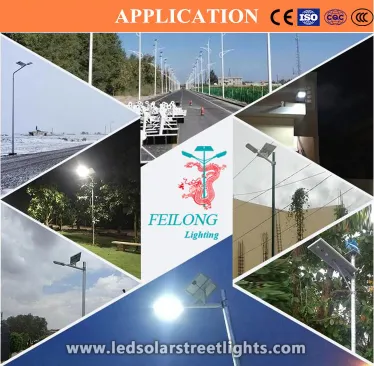
Yangzhou Goldsun Solar Energy Co.,Ltd. was established in 2009. Our company has been engaged in LED street light manufacturing industry for more than 10 years. Our products include solar LED street light, municipal high-power LED street light and low-power LED street light used in rural roads. The whole set of LED street light includes LED light head, light pole, constant power source, embedded parts, etc., which we can all provide. Because of the price of raw materials and the perfect industrial chain, our street light product is not only cheap but also of good quality with low failure rate.
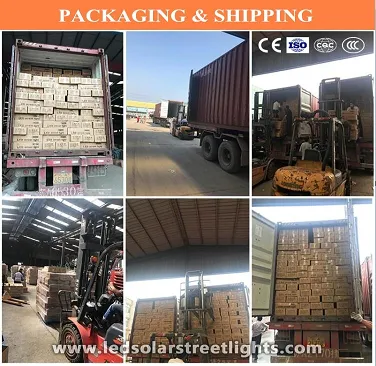
Our factory has been expanding overseas in recent years. In particular, the integrated Solar Street Light and High Mast Street Light have been warmly welcomed in Africa, Southeast Asia, the Middle East and some European countries because of the low failure rate, low cost, perfect installation and after-sales service of our products. Most clients have build long-term cooperation with our company.
FAQ
Q: Can you park next to a light pole?
Q: What are the light poles on the street called?
Q: How tall does a light pole need to be?
Q: How far apart should light poles be?
Q: How deep does a light pole need to be buried?
Poles are typically set into the ground: 10% of the overall height + 2 feet, except in questionable soil conditions. Example: Overall pole height: 30 feet, the pole should be buried: 3 feet + 2 feet = 5 feet below grade, and 25 feet above grade.
Q: How are Light Pole design standards calculated?
Q: How tall is a light pole in a neighborhood?
Q: How tall are light poles in parking lots?
Mounting heights for parking lot lighting can range from 12 ft. to 20 ft. but in some cases can reach as high as 35 ft. The size of your parking lot will be used to determine the recommended height of your poles; larger areas are better suited to higher poles and vice-versa.
Q: How long does a light pole last?
Q: How do you calculate street light poles?
Required Streetlight Watt = (Lux per Sq. Meter X Surface Area of Street Light) / Lumen per Watt.
Required Streetlight Watt = (6 X 1) / 20.
Q: How far should lights be from each other?
A good general rule for placement is to divide the height of the ceiling by two. The result is the amount of space to leave between each light.
Q: What size pole for street light?
Q: How much space do I need around my pole?
Q: What are light poles made of?
Q: What material is used for street light poles?
Q: Are light poles aluminum?
Q: How tall is a residential utility pole?
Typical utility poles measure 30 to 60 feet for poles in residential neighborhoods, and from 60 feet to over 120 feet along major highways.
Q: How tall are light poles by freeway?
High mast lighting refers to light pole standards or derricks that typically range from 60 feet to 150 feet tall. Conventional roadway light poles range from 25 feet to 50 feet above the roadway surface. High mast lighting for highways has its origins in Europe in the 1950s.
Q: What is street lighting pole overhang?
Q: What is the best light pole material?
As one of the most professional street light pole manufacturers and suppliers in China, we're featured by quality products and good price. Please feel free to buy cost-efficient street light pole for sale here from our factory. For more company information, contact us now.
Popular Products


