


The Best Street Light Bracket Manufacture!
Yangzhou Feilong Lighting Manufacturing Co., Ltd. was established in 2006. Our company has been engaged in LED street light manufacturing industry for more than 10 years. Our products include solar LED street light, municipal high-power LED street light and low-power LED street light used in rural roads. The whole set of LED street light includes LED light head, light pole, constant power source, embedded parts, etc., which we can all provide. Because of the price of raw materials and the perfect industrial chain, our street light product is not only cheap but also of good quality with low failure rate.
Why Choose Us
Rich Production Experience
Our company has been engaged in LED street light manufacturing industry for more than 10 years.
Strict Quality Control
Because of the price of raw materials and the perfect industrial chain, our street light product is not only cheap but also of good quality with low failure rate.Most clients have build long-term cooperation with our company.
Diversified Product Categories
Our products include solar LED street light, municipal high-power LED street light and low-power LED street light used in rural roads. The whole set of LED street light includes LED light head, light pole, constant power source, embedded parts, etc., which we can all provide.
Reasonable Product Price
In particular, the integrated Solar Street Light and High Mast Street Light have been warmly welcomed in Africa, Southeast Asia, the Middle East and some European countries because of the low failure rate, low cost, perfect installation and after-sales service of our products.

The flood light pole is made of high quality hot-rolled steel plate, which is bent into trapezoidal shape according to the size of the bar, and then welded, polished, galvanized, packaged and shipped.

Yard light is a kind of outdoor lighting, usually refers to the outdoor road lighting under 6 meters. Its main components are light source, lamp, lamp pole, flange and basic embedded parts.

Hot dip galvanizing of octagonal pole according to ASTM A 123, color polyester powder or any other standard required by customers. We have past flaw testing. Internal and external double welding makes the welding beautiful in shape.

Shape of swaged pole: Round conical; Octagonal conical; Straight square; Tubular stepped; Polygonal.

The Cast Iron Lamp Post is equipped with Integrated high-voltage drive to maximize the power factor of the power supply.

The combination of the street light bracket and the upper and lower cover of the street light fix the middle fixture of other parts of the street light.
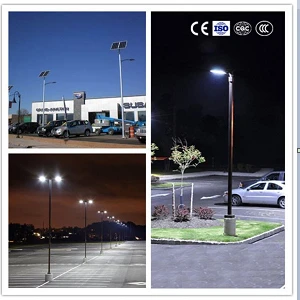
Parking lot light pole is made of high quality high strength carbon steel plate, wall thickness range from 2.5mm to 5.0mm. According to the light pole height pole top diameter range 60-90mm, pole bottom diameter range 132-210mm.

Traffic light post is an important part of traffic signal and an important frame part of road traffic signal lamp. The signal lamp pole is divided into octagonal signal pole, cylindrical signal lamp pole and conical signal lamp pole according to its structure.
What is Street Light Bracket
Street light brackets play a crucial role in urban infrastructure, providing support and stability for street lights, ensuring they efficiently illuminate our roads and pathways. While often overlooked, these brackets undergo meticulous design processes to meet the demands of modern cities.
Benefits of Street Light Bracket
Improved Visibility and Safety: Advanced lighting technologies and optimized illumination levels enhance visibility and promote pedestrian and vehicular safety in urban environments, reducing the risk of accidents and crime.
Energy Efficiency: LED lighting fixtures combined with smart controls significantly reduce energy consumption and operating costs compared to traditional lighting systems, contributing to sustainability goals and environmental conservation efforts.
Enhanced Urban Aesthetics: Thoughtfully designed street light poles contribute to the aesthetic enhancement of urban landscapes, creating visually appealing streetscapes and fostering a sense of pride and identity within communities.
Durability and Longevity: Modern street light poles are engineered to withstand harsh environmental conditions, featuring corrosion-resistant materials and durable finishes that ensure longevity and minimal maintenance requirements.
Key Considerations in Street Light Bracket Design
Material Selection: The choice of materials significantly impacts the durability and performance of street light brackets. Common materials include steel, aluminum, and composite alloys, each offering distinct advantages in terms of strength, weight, and corrosion resistance.
Load Bearing Capacity: Street light brackets must support the weight of light fixtures while withstanding external forces such as wind and snow loads. Engineers meticulously calculate load requirements to ensure structural integrity and safety under varying conditions.
Mounting Options: Different mounting configurations cater to diverse urban landscapes and lighting requirements. Whether pole-mounted, wall-mounted, or suspended, the chosen bracket design must seamlessly integrate with existing infrastructure while optimizing light distribution.
Aerodynamics and Wind Resistance: Efficient aerodynamic profiles minimize wind resistance, reducing the risk of bracket displacement or damage during storms. Streamlined designs not only enhance structural stability but also mitigate energy consumption by reducing drag forces.
Accessibility and Maintenance: Accessibility features facilitate ease of installation and maintenance, allowing technicians to safely access light fixtures for routine inspections and repairs. Hinged or telescopic designs simplify maintenance tasks, minimizing downtime and operational costs.
Width of the road: To distribute the lights more averagely, the wider roads should use higher poles. For example, if the road is 8 meter two lanes, regularly we will suggest the street light poles of 6meters. And if the road is 4 lanes of 16m, we will suggest to use 12m poles.
The Pole Distance: If the poles are installed very far, we will suggest higher poles with more powerful street lights to spread the light further. For example, if the pole distance is within 15 to 20meter, 6m pole is enough. But if the pole distance is 30m, you may choose at least 10m pole. Pole distance/pole height=3 will be a good choice for most of roads.
The Grade of The Roads: If the poles are installed by village roads or countryside road, 6 to 8m will be enough. But if it is main road, or national roads, 10m to 12m poles are more recommended.
The Surroundings: The pole height needs to be adjusted based on surroundings. If there are tall buildings or trees nearby, you may need to use higher poles. And if there are a lot of pedestrian areas, and you need to lower the pole height to avoid too much light pollution.
Local Governmental Regulations: Check with your local government about the municipality of the regulation for the street light pole heights or other standards.
What Types of Light Pole Bracket Designs Exist
Elliptical brackets have a sleek design and are more costly. They exist in high end residential communities and commercial utility environments.The pipes are made from lightweight, durable, non-conductive aluminum.
Cantilever brackets are often found in municipalities. This style of arm is typically common in older neighborhoods that have been around since the 1950s and are generally added as a mounted bracket onto a city's street lights. The light poles installed in these areas are poles made for above ground use, so they rely on cantilever arms to fit the current style rather than updating these foundations to underground light poles – which comes at a high cost.
Cantilever brackets attach onto steel or aluminum poles, and can adapt to a variety of light fixtures. These extenders also come in a range of sizes. You can even mount shorter 30-inch cantilevers to a pole for wifi, using smart grid utilities to manage routers and wifi outages.
Wrap around brackets fall under a category of light pole mounting brackets which is commonly found in utility and commercial spaces, such as electrical lighting work. These reinforcements wrap around any kind of pole – whether it's steel, wood, or concrete poles – and are mounted onto light posts to accommodate any light fixture.
Light Pole Components: Here are Some Tips for Their Inspection and Maintenance

Foundation
Light pole foundations are normally made of reinforced concrete piers with jutting steel anchor bolts. Anchor bolts and washers are used to secure the pole to its foundation. Typical problems with concrete foundations include spalls (fragmenting), cracks, and leaning foundations.
When cracks line up with an embedded anchor bolt, the structural capacity of the assembly could be compromised. For example, the ability to resist wind loads could be reduced which could result in the pole collapsing.
Ole Shaft
Water and debris can accumulate inside a pole at its base, often entering through open spaces. This can occur below the base plate, through the hand hole in the pole, or through other openings. It can cause (or increase) corrosion on the interior surface of the pole. Even when severe, interior corrosion may be visually undetectable from the exterior.
You should visually inspect the exterior pole shaft for areas of corrosion, rust, and any dents or signs that the structural integrity has been compromised. To help determine if there has been any corrosion in the interior of the pole, ultrasonic thickness gauges can be used from the exterior to measure the remaining pole wall thickness.
The easiest way to reduce interior corrosion is to keep the pole interior clean and promote ventilation/drying. This will extend the service life of the pole. You should also regularly apply corrosion-inhibiting coatings on the exterior surfaces of steel poles and base plates.
If you're purchasing new light poles for a project, galvanized steel poles are recommended. They typically resist corrosion much better than painted steel poles. Galvanized poles also provide better protection for the interior surface of the pole.
Brackets and Arms
Check for metal fatigue in brackets, arms, and luminaires through visual inspection. Metal fatigue can be caused by such things as corrosion, vibration, constant stress, or temperature changes. Signs of metal fatigue include cracks or ruptures.
Covers for Handholes, Bases, Pole Caps, and Nuts
Make sure that all covers are firmly attached. Loose or partially opened covers allow dust and moisture to get inside the pole and accelerate corrosion.
Base Plates
Visually assess the base plate for nut tightness, appropriate hole size, and bearing. A base plate acts as the main contact point between the light pole and the foundation. It's designed to transfer forces into the anchor bolts and foundation. Base plates help to prevent wind from tipping over the pole assembly. They do this by pulling up on one or more of the nutted anchor bolts.
If holes in the base plate are oversized compared to the diameter of the anchor bolt and nut, a pull-through failure might happen which would destabilize the whole structure. Washers might be used as part of the design or to accommodate oversized holes.the washers require the proper design to effectively transfer loads without becoming deformed.
Welds
The connection of the pole to the base plate typically has a socket-type connection. This occurs where the pole is nested within a hole in the base plate, and the welds around the pole edge at both the top and bottom of the base plate transfer loads from the pole and luminaire to the base plate. Weld cracks are usually the result of cyclical wind loading of light poles. Periodic inspections of welds should be performed by qualified personnel.
When possible, avoid using square poles, especially those greater than 30 feet in height. Square profile poles with fillet welds made using a manual process are most susceptible to weld cracking. This is especially true for taller poles. Square poles experience stress concentrations at the corners. By contrast, round poles allow for a more even distribution of stress. It's recommended that you use round, tapered poles with pole-to-base plate welds performed by an automated process.
Anchor Bolts
Make sure that each anchor bolt nut is in place and firmly tightened. Tight installation of the upper nuts is critical for long-term performance. If nuts are not properly tightened initially, or if they loosen over time, the subsequent gap will permit the pole to rock on its foundation under wind loading. This type of repetitive rocking can cause impact loads on all components. This rocking can increase the risk of developing cracks.
Pole structures are usually anchored to their concrete foundation with anchor bolts which are threaded steel rods. They are embedded during foundation concrete placement. The anchor bolts extend above the foundation surface and are aligned with holes in the pole base plate, and they are secured with nuts.
Accumulating moisture can speed up corrosion of the base plate, pole, and anchoring components. This ultimately leads to early failure. Base plate and anchor bolt covers can hold moisture and debris which can cause corrosion of the base plate, the anchor bolts, and the pole itself. It is recommended that these covers are not used.
Other Appendages
Appendages can unintentionally increase the wind loads on the pole. These include banners, signs, and security cameras. They should not be added to a pole unless the pole was designed to handle the additional wind load.
Vibration
Look for signs of vibration. This includes:
Humming or noise in the pole
Visible movement of the pole and/or the luminaire
Loose attachments
Rust just above the weld at the base of the pole.
Luminaire
If you are considering replacing the luminaire mounted on the pole, it is important to understand that each luminaire type can have an increased effect on the contribution of wind load. When it's time to replace a luminaire, an increase in wind load may require a structural analysis and field assessment to make sure that the original design and current condition of the pole can effectively resist the increased wind load.
Street Light Pole Spacing Guidelines
Taller poles can be placed further apart from each other because the light spread from the fixture will be wider.
The width of the street will also determine how the light poles will be spaced. Narrow streets will not require the same amount of lighting as wide streets.
If the distance between the poles is too far, there will be dark spots between the poles. If the distance between the poles is too close, there will be bright spots between the poles. In both cases, the lighting will be uneven and not uniform across the roadway.
As a rule of thumb, the spacing between the light poles should be 2.5 to 3 times their height. For example, if you are using 30-foot poles for your light fixtures, a 75- to 90-foot spacing between poles is recommended.
Another thing to consider regarding street light spacing is the arrangement of the light poles. This will be dependent on the width of the street. Here are a few general tips:
For streets that are over 65 feet wide, you'll want to have the poles symmetrically arranged on both sides (across from each other).
For streets that are 51 to 65 feet wide, you'll want to have the poles arranged and intertwined with each other (opposite or shifted) on both sides.
For streets that are 50 feet wide or less, you'll want to have the poles arranged on one side.
For wider streets that have a divider in between lanes, you can place additional poles in the center with two fixtures mounted on each one to illuminate both sides.
Our Factory
Our factory has been expanding overseas in recent years. In particular, the integrated Solar Street Light and High Mast Street Light have been warmly welcomed in Africa, Southeast Asia, the Middle East and some European countries because of the low failure rate, low cost, perfect installation and after-sales service of our products. Most clients have build long-term cooperation with our company.


FAQ
Hot Tags: street light bracket, China street light bracket manufacturers, suppliers, factory


